
|
T H E O R D E R O F T H E T I L E | |||
| |||
|
Issue No. 10 | May 2026 | |||
|
"At this table, we remember." |
|
My Dearest Table Guests,
Prim is writing this on the Thursday before Memorial Day, and before she says a single word about strategy or sets or the summer circuit, she would like to stop. She would like to ask you to stop with her. This is the issue of the year in which a weekly newsletter about a parlor game, in a community that is overwhelmingly made up of American women, has to acknowledge that the Monday coming is not an ordinary Monday. It is Memorial Day. The day this country has set aside to remember the soldiers who did not come home. Prim has family who served and who serves, and family who did not come home, and she is not willing to publish an issue about flower pairs and pusher weight without first saying, plainly and with no ornament, that the table we sit at this weekend is the table their sacrifice made possible.
She would like to say one more thing before the issue begins, because the community this week has been asking for it in quiet ways, and Prim would like to answer clearly. There are a great many active-duty and veteran women in this community. There are military wives and military mothers and military daughters at tables across this country who play this game precisely because the game is a respite, a ritual, a gathering that has nothing to do with duty and everything to do with presence. The joy these women find at the table is not separate from their service, or from the service of the people they love. It is connected to it, because the purpose of everything they do, and everything their people do, is to protect the possibility of a Thursday afternoon at a kitchen table, with four friends, a rack, and a wall. Prim would like this issue to be for them.
The tagline for this week was going to be something else. Prim has changed it. At this table, we remember. That is the tagline. That is the frame. Everything in these pages this week is in service of it.
We will still talk strategy, because Prim would not honor this community by stopping the work. We will talk about the discipline of the hand that cannot close, which Prim believes is the 2026 card's quiet Memorial Day lesson. We will talk about how to acknowledge the day at your Thursday game without awkwardness. We will meet military women, past and present, for whom this game has been a refuge, a ritual, and in some cases a lifeline. We will look at the role this game played in Jewish American women's wartime circles and in veterans' hospitals after the war. And we will spend a long, careful moment with the sets and mats that carry the visual language of patriotism without cheapening it. Pull up your chair. The wall is built. Let us begin.
~Prim |
|
|
Prefer to listen? Prim reads each letter aloud on Spotify. 
|
THE DRAW |
A community that is not unfamiliar with sacrifice, and a weekend on the calendar |
The community pulse this week has been unusually gentle, and Prim thinks it is because the calendar ahead is a serious one. The Facebook groups have been quiet about the typical fare. Fewer set drops. Fewer tournament debates. What Prim has seen in the last seventy-two hours, in larger numbers than she expected, are posts from women serving, whose husbands or partners served, whose mothers or fathers served, whose sons and daughters are serving, whose grandmothers played mahjong on weekends when their own husbands were overseas. The community is telling its own stories this week, in its own time, and the mahjong part of the story is, for many of them, the part that held the rest of the story together. Prim has been reading these posts all morning. She would like the rest of the community to read them too. Scroll slowly this week. Comment when you have something real to say. Do not scroll past a post from a Gold Star mother without pausing. The community has always been more than a set of tiles, and this week is the week we are reminded of it.
The Mediterranean Cruise returned to port this week, and the photos that came out of the cruise are, as predicted, breathtaking. Prim will post a roundup in the next issue when the community has had time to debrief. For this week, suffice it to say that the first major destination of the summer calendar executed well. Destination Mah Jongg delivered. The players who went had a remarkable time. The next wave of destination events is now within the registration window for several of you, and Set Your Rack below will have the particulars.
One piece of news worth flagging. Several Jewish Community Centers across the country have announced that they will be hosting Memorial Day weekend community play sessions, many of them with a small donation component directed to veterans' organizations. Prim will list the ones she has confirmed below. If your local JCC is running one, Prim would gently suggest that this is a better Memorial Day activity than whatever the hardware store is advertising. Sit down. Play a hand. Give a few dollars. Remember the reason the day exists. The game you love can do good work on a day that asks something of all of us.
|
Did this letter arrive by way of a friend? Prim would love to add you to the list. 
|
CRAK THE CARD |
The hand that will not close, and the discipline of playing it out with honor |
Prim has been thinking all week about which Crak the Card lesson fits this issue, and she has landed on one that is a little unconventional, because the week deserves it. The lesson is about the hand that cannot close. Every player in this community knows the feeling. You are in round eight, the wall is thin, the tiles you need have been thrown and called and are gone, and the rack in front of you is not going to win this game. The question is what you do from that moment forward. Most players have never been taught an answer. The 2026 card, more than any recent card, rewards players who have thought carefully about this exact situation, and Prim would like to walk you through it, because the discipline of the closing-out hand is the mahjong analogue of a much larger kind of discipline, and she thinks it is the lesson that belongs in this issue.
The hand is over. The game is not.
The first thing to understand, and the thing most players get wrong, is that the moment your own hand becomes unwinnable is not the moment the game becomes unimportant. The game continues. Other players still have hands they are trying to close. The discards you throw from this moment forward are information the rest of the table is reading. The calls you make, or do not make, still matter. A player who mentally checks out when her own hand is lost has forfeited not just her own game but her participation in the game everyone else is still playing, and this is a subtle but real violation of the communal contract of the table. You finish the game with attention, or you do not deserve the seat you are sitting in. Prim will say it that plainly, because she believes it.
The defensive pivot is a form of honor.
Once your hand cannot close, your job changes. You are no longer building. You are defending. Your task, for the remainder of the game, is to make it harder for the player who is closest to winning to close her hand. This is not petty. This is not sour. This is the game as it is actually designed. Every tile you throw is either a gift to someone or a stone on her path. Read the exposures at the table. Read the discard pile. Identify who is closest, and throw the tiles that are least useful to her. A player who executes the defensive pivot well, even with a hand that is long dead, often changes the outcome of the game. Not her outcome. Someone else's. That shift is a form of honor. The closing-out player who plays defense well is the player who earned her seat. The closing-out player who throws whatever she feels like, because she has given up, has given up on more than her own hand. Do not be her.
The closed hand, as a category, teaches this discipline.
The 2026 card has several hand families that are best approached as closed hands, which means the entire hand is built from the wall without exposing any meld to the table. The closed-hand strategy is the strategy of discretion. You are holding your cards tight. You are giving the table no information. You are accepting that your win, if it comes, will come late, quietly, and without warning. The closed hand teaches exactly the discipline Prim is describing. You play the whole game as a private document. You win, if you win, without fanfare. You lose, if you lose, without collapsing. The closed hand is a meditation on patience, on privacy, and on the idea that the strength of a player is not in what she shows but in what she carries quietly. Prim does not recommend the closed hand as a primary strategy on every card. She does recommend that every player spend a season training in closed-hand discipline, because the discipline transfers. The closed-hand player, even when she is not playing a closed hand, plays every hand better. Her discards are cleaner. Her reactions are smaller. Her exposures, when she does use them, land with more weight because she has held back so long.
What this week's discipline looks like in practice.
Prim is going to be direct about what this section is really about, and she trusts you to take it in the spirit it is offered. The discipline of the hand that cannot close is the discipline of doing your duty after your own reward is gone. It is the player, in round eight, who plays the remainder of the game with attention because the game deserves attention. It is the soldier who finishes the mission after the personal glory is impossible. It is the firefighter who goes back into the building after she knows the building will not be saved. The discipline of the lost hand is a small, weekly rehearsal for larger kinds of discipline that other people, in other contexts, have practiced at much greater cost. Prim would not normally draw this kind of line in these pages. This week, she will. The card we are holding this year is a good card for learning this lesson. Play the hand that cannot close. Play it well. Remember why you can.
THE TABLE IS ASKING |
Memorial Day at the Thursday game, and how to acknowledge the day without awkwardness |
The question arrived from several hosts this week, phrased almost identically.
|
"I am hosting my Thursday game this week, and it is the week before Memorial Day. I want to acknowledge the day, but I do not want to make it awkward or performative or political. Is there a right way to do this, and what is the wrong way?" |
Prim has thought about this one carefully, because it is the kind of question where well-meaning hosts can easily overshoot and make something more awkward than if they had said nothing. Let her give you her answer in three parts, because there is a right way, and there is a wrong way, and the difference matters.
The right way is small, specific, and brief. Before play begins, as your guests are settling and you are pouring the first round of whatever you are serving, you say something like this. Before we start, I just want to acknowledge that Monday is Memorial Day, and I am thinking this week about anyone at this table whose family has served or whose people did not come home. If you want to say anything about someone you are thinking of, there is a moment here for that. And if you just want to play, that is also entirely fine. Then you stop. You do not extend it. You do not turn it into a speech. You let the table do what the table does. Some guests will say a name out loud. Some will not. Both are correct. You have opened the door. What each guest chooses to carry through it is hers.
The wrong way is anything that turns the moment into theater. Do not ask each guest to share a story. Do not prepare a reading. Do not play a video. Do not decorate the table in red, white, and blue unless you would normally decorate the table in red, white, and blue for a summer kickoff, which is a different kind of decoration with a different meaning. The wrong way is always the version that makes the evening about the host's performance of reverence rather than about the guests' own relationships with the day. Memorial Day at a private game is a quiet acknowledgment, not a program.
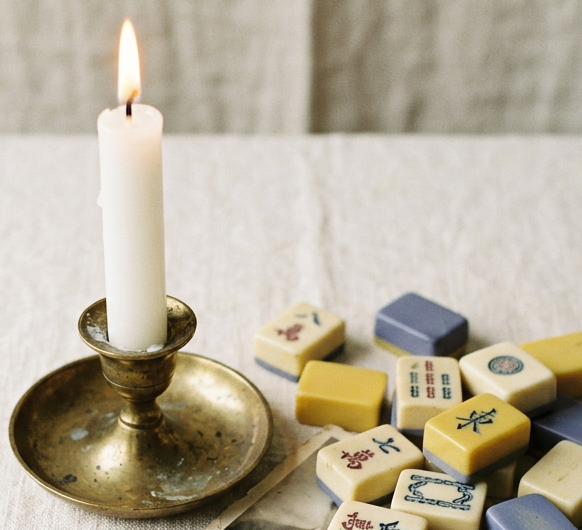
The middle way, which Prim has seen done beautifully in several private games she has attended, is to add one small gesture that is specific to your table. A place setting at an empty seat, not explained, just present. A single candle on the sideboard, lit before play. A bowl on the table for any guest who wants to contribute to a veterans' charity, with the name of the charity on a small card, and no one asking who contributed what. The gesture is specific, it is easy to ignore if a guest is not in the mood for it, and it is there for the guest who is. The gesture does not interrupt the game. The gesture sits alongside the game, the way all the best table rituals sit alongside all the best games. Choose the gesture that matches your table. Do not choose more than one.
The other question Prim was asked, which she will answer briefly here because it is adjacent.
|
"What do I say if a guest at my table shares something heavy and I do not know what to say back?" |
You say this. Thank you for sharing. Then you sit in the silence for a moment. Then you play the hand. That is all that is required. The pressure to respond with the perfect thing is the thing that keeps hosts from creating these moments in the first place. You do not have to say the perfect thing. You have to make room for the real thing. The table will take it from there.
Prim will close this section with one last piece of advice, because it matters. Some players at your table this week will be carrying more than they are showing. A woman whose child is currently deployed, and who has been carrying it privately. A woman whose parent is a veteran with declining health, and who has not told anyone yet. A woman who lost a sibling decades ago and for whom the day has never gotten easier. These women will be at your table on Thursday. You will not know who they are. Play gently this week. The game will do its work. Sometimes the most important thing a table can do is provide a few hours in which a player who is carrying something can put it down, forget about it, and focus on the rack in front of her. Give your guests that kind of table. That is the real acknowledgment.
|
WHO'S TALKING |
The women who served, the women who wait, and the game that held them |
Military women have been playing this game for longer than most people realize.
Prim would like to spend this section with the women in this community whose relationship with American Mahjong is inseparable from their relationship with service. They are not a small group. They are, by Prim's rough estimate, hundreds of thousands of women across the country, and they include active-duty servicewomen, veterans, military spouses, Gold Star mothers, and the daughters and granddaughters of all of the above. The game has been a quiet companion to American military life for most of its American existence, and the stories you hear when you start asking are remarkable. Prim has been collecting a few of them this week. She would like to share three.
The mahjong circle at the base.
Prim heard from a reader, a career Navy wife who asked to be identified only as K, who described the mahjong circle she started at a base in Virginia in the early 2000s. The circle met weekly, in a room the base chapel made available. The players were a mix of wives, a few active-duty servicewomen, and one retired Army colonel who had learned the game from her own mother in the 1970s and who, K said, was a fearsome player. The circle was not advertised. It did not have a name. It met for seven years. K wrote that during deployments, when her husband was overseas, the Thursday circle was the only reliable structure in her week, and she can trace friendships she still keeps to the women she met at that table. The circle ended when the chaplain who had been championing it retired, and no one quite had the energy to restart it. K would like the community to know the circle existed, and that it mattered, and that she is still in touch with eleven of the regulars from those years, and that three of them have started mahjong groups at new bases where they or their husbands were later stationed. The pattern replicates. The game travels with the families. Prim would like more of us to know this.
The VA hospital rec room.
Another reader, Em, is a recently retired occupational therapist who worked in VA hospital settings for thirty-two years. She wrote to Prim to say that American Mahjong has been a quietly effective therapeutic activity in several of the VA rehabilitation settings she worked in, particularly with women veterans recovering from injuries that affect fine motor control, attention, or cognitive sequencing. The game requires exactly the kind of sustained, multi-dimensional attention that rehabilitation protocols are often trying to rebuild, and the social structure of the four-player table produces motivation that solo exercises cannot match. Em has run mahjong groups as part of her therapeutic work for twenty of her thirty-two years, and she wanted the community to know that the game has done real work in places most mahjong players will never see. She also noted that the wider community's sets, donations, and instructional materials have been a meaningful resource in these programs. If you have a set you are no longer using and you are looking for somewhere to send it, Prim will say, on Em's behalf, that your local VA hospital's recreation therapy department is worth a call.
The tournament champion who flew helicopters.
The third story Prim will tell briefly, because the reader asked. A woman Prim will call J, who is now a retired Army warrant officer and a current regular on the tournament circuit, learned mahjong in 1998 from a friend at Fort Rucker in Alabama while she was training to fly helicopters. She carried a travel set to four subsequent assignments, including one in Germany and one in South Korea, and she started small tables wherever she went. She has even placed in the top ten at Greenbrier. She would like younger women in this community, military or civilian, to know that the game is not incompatible with a serious career, and that the women who play this game include women who have flown combat helicopters, commanded platoons, served as military physicians, and raised children in service or on their own while their spouses were overseas. The game belongs to all of them. The community is richer for every one of them. J was not sure anyone would want to print her story. Prim is glad to.
Honor the players at your own table.
The community this week is full of women like K, Em, and J, and you will not always know which of your tablemates fits this description. What you can do is play gently, listen carefully, and carry the awareness that the game is held up, in part, by women whose relationship to the larger idea of service is more direct than most of us will ever experience. If one of your regulars is a veteran, thank her this week. If one of your regulars has lost someone, sit with her. If one of your regulars is actively deployed or has a spouse who is, ask her how she is, and mean it. The table is a place where these things can be said without ceremony. This week, more than most, the table should do its work.
TILE ENVY |
Patriotic without the costume, and the sets that carry the weight of the week |
Prim wants to walk a careful line in this section, because red-white-and-blue mahjong sets are a real category and she does not want to mock them or endorse them uncritically. The honest truth is that some patriotic-themed sets are lovely and some are garish, and the difference is in the restraint of the designer. Prim would like to point you toward the restrained end of the spectrum this week, because a Memorial Day table deserves a visual vocabulary that matches the weight of the day, not the aesthetics of a Fourth of July cookout.
The Mahjong Line has several colorways over the years that have leaned into Americana without caricature. Their crisp white and true blue palettes, in particular, carry the feeling of a classic American aesthetic without the pageantry of full flag colors. A table set with crisp white tiles, a white mat, and a simple white linen runner feels appropriate for the week in a way that a red-white-and-blue sequined set may not. Prim would argue that the grown-up version of patriotic table design is about palette, not about flags.
For the tile set itself, Prim would point you toward the vintage collectors' market this week, not the new design market. There are sets in private collections from the 1940s and 1950s, often owned by families whose original buyer was a military spouse or a postwar bride, that carry the aesthetic and material signature of that era. If you have access to such a set, whether in your own family or through a collector friend, bringing it out for Memorial Day week is a more authentic gesture than buying anything new. The set has seen this week before. Let it see this week again.
One last note on the accessory side. Several brands in the community, including some that Prim has featured in these pages, offer modest percentages of sales on specific items to veterans' organizations throughout the year, not only during Memorial Day week. If you are shopping this week, do a little homework on where your dollars go. The brands that are giving quietly, year-round, are the ones worth supporting, far more than the brands that mount a performative Memorial Day sale and then go silent until the next holiday. Quiet generosity is the aesthetic of this week. Let it extend to how you spend as well as how you decorate.
|
Prim keeps a small shop of her own. Printables, score cards, and a few things she is quietly proud of. 
|
SET YOUR RACK |
The summer circuit opens, and the fall registers |
The summer destinations are confirming dates.
Destination Mah Jongg's San Diego Double Tournament is two weeks from this weekend, and registration is now firmly closed with a waitlist in place. The Shriners Mah Jongg Tournament in Austin on June 20 still has open slots. Destination Mah Jongg Atlantic City in mid-August has about sixty percent of its registrations filled, which is typical for this point in the calendar. The fall calendar is beginning to solidify. Mah Jongg World Championship in Las Vegas is tracking for its usual October scale, with registration running slightly ahead of last year at this point, which Prim would note as a meaningful indicator of overall community growth.
Mah Jongg Fever late summer preview.
The next major Mah Jongg Fever event is a late-summer resort destination, and Prim has heard enough community buzz about it to say that it is worth considering if you are still deciding on a late-summer event. The Fever culture, which Prim discussed in Letter-09, is the warmest on the national circuit, and late-summer registration tends to fill rapidly.
Beyond the schedule, a Memorial Day thought.
Prim will close this section with a thought that is not on any calendar. Several veterans' organizations across the country run ongoing game programs that welcome civilian volunteers, and American Mahjong has begun to show up in some of these programs in recent years. If you are a player who has been looking for a way to contribute that uses the skills and community you already have, these programs are worth a conversation. The game you know how to play could be taught, at your own pace, in a setting where the transmission would matter to the person receiving it. This is not a call to action Prim will make every issue. She is making it this week because the week calls for it.
| This Weekend | Memorial Day Monday, May 25 |
| Waitlist | Destination Mah Jongg San Diego Double Tournament San Diego, CA • June 5–7 |
| Open | Shriners Mah Jongg Tournament Austin, TX • June 20 |
| Open | Destination Mah Jongg Atlantic City Atlantic City, NJ • August 16–18 |
| Open | Mah Jongg Fever late-summer destination event Check the Fever site for dates |
| Open | Mah Jongg World Championship Paris Las Vegas • October 16–18 |

|
CRAK INTELLIGENCE |
The wartime circles and the VA hospital wards, or the game that held a generation |
|
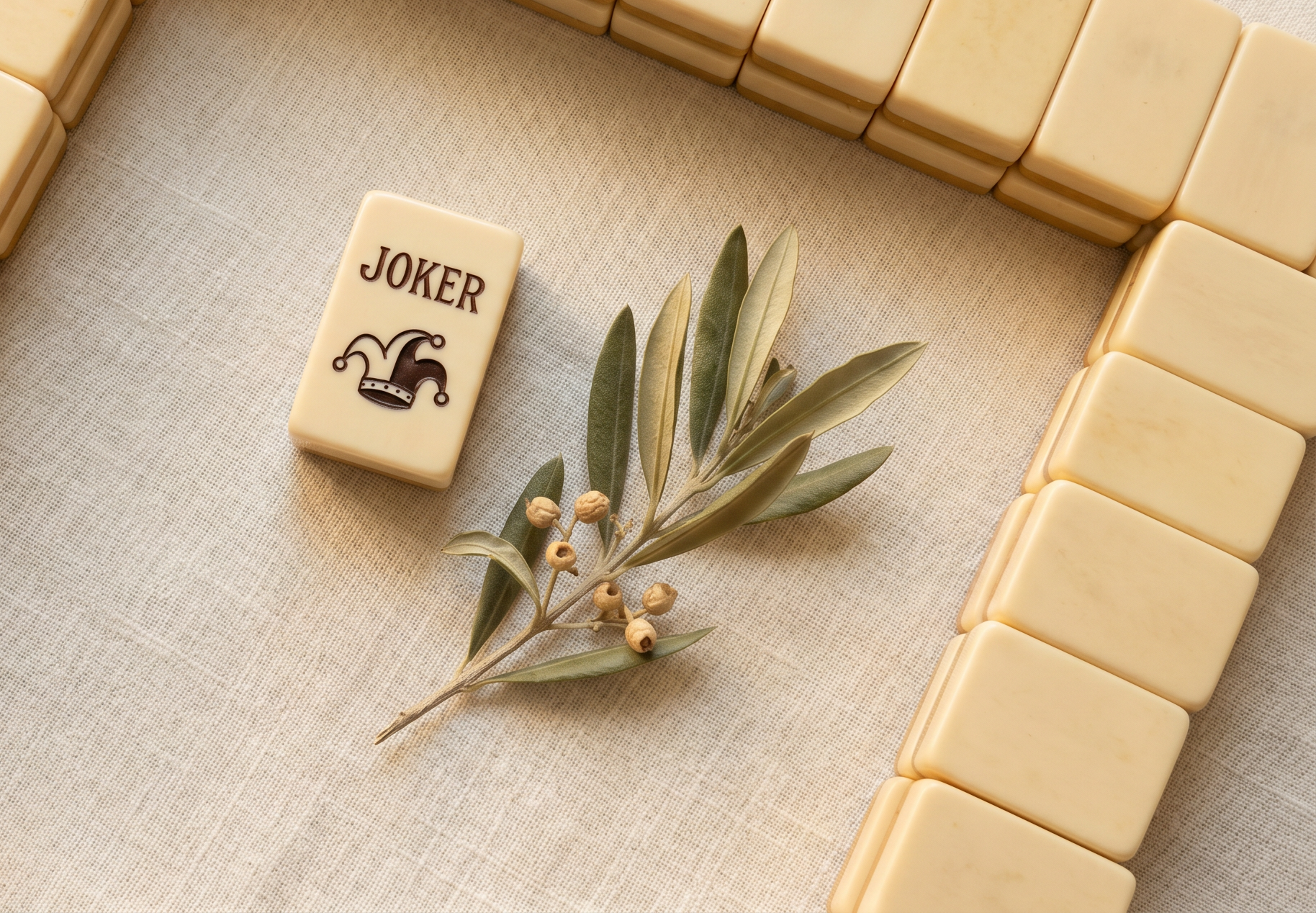
Prim would like to offer this section not as a history of the game during wartime, which is too large a topic for a single section, but as a history of the circles of women who kept the game alive through the most difficult American decades of the last century. The story is specific, regionally varied, and largely undocumented in any academic sense. What follows is what Prim has pieced together from conversations with older players, reading in the Catskills oral histories, and her own family's stories. The bibliography is thin. The practice was real.
In the 1940s, as the American economy mobilized for the Second World War and millions of American men went overseas, the women who remained at home formed countless informal mahjong circles that functioned as much as grief-and-waiting structures as they did as game groups. The circle Prim's dear friend described, in a small town in Ohio, met every Wednesday afternoon in one of four rotating kitchens. The players were all military wives. The game was the reason to gather. The gathering was the reason to endure the week. When telegrams arrived, the circle was often the first place the news was told. When the men came home, the circle continued, because the women had become each other's primary friends by the end of the war in a way that even marriages did not always match. Some of those circles ran for forty years. Some of them are still running in modified form through the daughters of the original players.
The Jewish American women's circles of the 1940s and 1950s, which Prim has referenced in earlier issues, were a central variant of this pattern. The Catskills Connection Prim covered in Letter-04 is part of this story. The resort communities, and the urban neighborhoods that fed them, were built around intergenerational women's gatherings where the game was the anchor. The NMJL's founding in 1937 had standardized the game enough that these circles could function across geographies. A woman who learned in Brooklyn could join a circle in the Catskills could visit a cousin in Cleveland and sit down at a table that played recognizable hands. The standardization was its own kind of infrastructure, and during the war years, that infrastructure held.
The VA hospital story is different, and less discussed. After the Second World War, and again after Korea and Vietnam, American Mahjong showed up in VA rehabilitation settings in ways that are almost entirely unrecorded but that Em, the occupational therapist who wrote to Prim this week, confirmed from her own career. The game's combination of fine motor practice, cognitive sequencing, social interaction, and gentle competitive structure made it a useful tool in rehabilitation contexts, particularly for women veterans returning with injuries that affected attention and sequential processing. The formal documentation of this practice is nearly nonexistent, because the therapists who used the game were generally running informal groups rather than publishing academic results. But the practice existed. The game did the work. The women it helped now have great-great grandchildren carrying on their legacy, and the stories they told mostly disappeared with them.
The thing Prim would like you to carry from this section is the simple recognition that the game you are playing has been load-bearing for a very long time. It has held women together during wars. It has rebuilt attention in VA hospital rec rooms. It has kept widowed spouses in community for decades after their circles' original purpose had changed. This is not a story about mahjong as a metaphor for anything. This is a story about mahjong as itself, a set of tiles, a card, a wall, and four women, doing the work that community always does when it is done well. At this table, we remember. We remember the women who built this community in circumstances we will never fully understand. We remember the soldiers their tables waited for. We remember that the game we play on a Thursday afternoon was once the thing that made a Thursday afternoon bearable for a woman whose husband was somewhere she could not reach. Play this week with that awareness. The wall is built from more than tiles.

|
A MEMORIAL WEEKEND NOTE |
For the families, the veterans, and the mothers who waited |
If you are a veteran reading this, Prim thanks you. If you are the mother, spouse, sibling, or child of someone who served, Prim thanks you. If you are a Gold Star family member, Prim honors you. If you are none of the above and you are planning to sit down at a mahjong table this weekend with people whose lives have been touched by service in ways you may not know about, play gently. Ask less than you usually ask. Listen more than you usually listen. Let the table do its work.
If you are moved to give this weekend, Prim would gently suggest the Tragedy Assistance Program for Survivors, known as TAPS, which supports military families grieving a loss, the USO, which has supported military personnel and their families for more than eight decades, and Mission 22, which works to prevent veteran suicide and to support the families it touches. All three are widely respected. All three would welcome your contribution. The amount does not matter. The gesture does.
| |||
|
Don't tap it, rack it, double stack it. | |||
|
Until next week, may your rack be blessed, | |||
|
Prim, as always | |||
| |||
|
Forward this to your favorite fourth. |